
The Dancing Feet of Wales - Shane Williams’ Rugby Mastery
Updated: Mar 1
JN Sport | JN Sport Correspondent
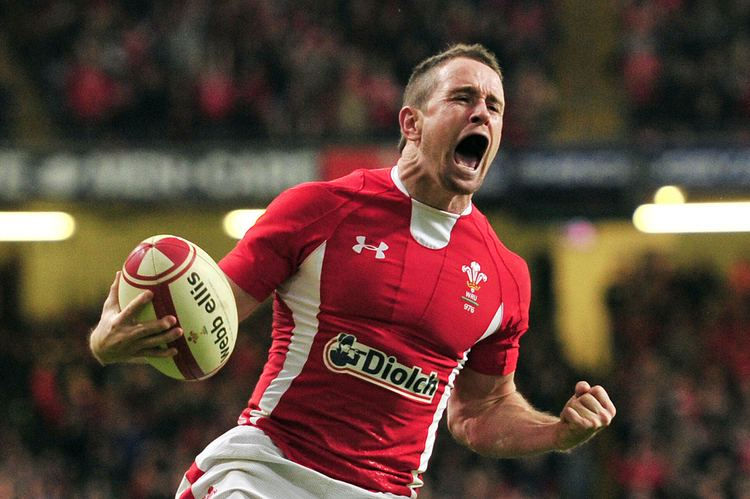
Greatness does not always arrive in towering frames. Sometimes it comes compact, coiled, and crackling with intent. Shane Williams was born on 26 February 1977 in Morriston, Swansea, and raised in the Amman Valley ; a region where rugby is less pastime and more inheritance. In villages such as Glanamman, the game is stitched into community life, and it was there that his love for rugby took firm hold.
Growing up, Williams played his club rugby with Amman United, learning quickly that heart can compensate for inches. Standing at just 5 ft 7 in , he was repeatedly told he was too small for the professional game. Yet rejection became fuel. While others saw limitation, Williams saw opportunity - an invitation to redefine what was possible for a winger in modern rugby.
From Rejection to Revival - The Ospreys Years
Before he dazzled stadiums, Williams endured setbacks. He was released by Neath early in his career, a moment that could have ended his ambitions. Instead, it sharpened them. When regional rugby arrived in Wales, Williams found his platform with the Ospreys.
At the Ospreys, he flourished. His lightning speed and dancing feet transformed tight contests into broken-field theatre. Defenders did not simply miss him - they were left chasing shadows. He played a central role in the Ospreys’ domestic dominance during the Celtic League era, helping them secure multiple league titles. Week after week, he proved that space is not found; it is created through courage and conviction.
What defined him at the regional level was not merely pace, but timing ; that subtle pause before acceleration, the feint of the hips, the sidestep that unbalanced even the most seasoned defenders. He was not the biggest man on the pitch, but he was often the most decisive.
Wearing the Red of Wales , A Career Etched in Fire
Williams earned 87 caps for Wales and scored 60 international tries ; a record that stood as the nation’s benchmark for years. Each try carried its own narrative, yet collectively they told one story: defiance.
In a Welsh shirt, he was electric. His performances during the 2005 Six Nations campaign helped Wales secure a Grand Slam, ending a 27-year wait. He repeated that triumph in 2008, playing a pivotal role once more. Those campaigns were not just victories; they were statements of resurgence for Welsh rugby.
His try against Scotland in 2008 at Murrayfield remains emblematic - gathering the ball deep inside his own half before slicing through defenders with balance and acceleration that bordered on instinctive genius. Moments like that do not appear on tactical whiteboards; they live in the imagination.
In 2008, his brilliance was globally recognised when he was awarded World Rugby Player of the Year, crowning him as the world’s very best. For a player once deemed too small, it was vindication of the highest order.
The Anatomy of a “Small” Giant
At 5 ft 7 in, Williams was small by professional rugby standards, particularly in an era increasingly dominated by physical power. Yet his stature became his advantage. His balance was exceptional, his footwork razor-sharp, and his acceleration devastating over short distances.
Yet what truly separated him was perception. He read defensive spacing instinctively, identified mismatches, and attacked shoulders rather than bodies. He chased kicks with relentless purpose and anticipated loose balls before others reacted.
In interviews, he often emphasised controlling what he could: effort, preparation, and bravery. That discipline, more than natural talent, sustained his excellence at the highest level.
Notable Performances - When Hope Followed Every Step
If statistics built Shane Williams’ reputation, moments built his legend. There was a recurring feeling among Welsh supporters ; whenever Williams had the ball and even a slither of space, belief surged through the stands. It was not blind optimism; it was learned expectation.
2005 Six Nations vs England, Cardiff - During Wales’ Grand Slam charge, Williams was electric against England at the Millennium Stadium. His footwork repeatedly unsettled the English back three, but it was his decisive break in the second half that encapsulated his threat. Gathering possession in broken play, he stepped inside the first defender, accelerated through a narrowing gap, and forced England’s cover defence into desperate retreat. The move shifted momentum at a critical moment and underlined his ability to turn pressure into opportunity. Welsh fans sensed it instantly , when Williams found space, something usually followed.
2008 Six Nations vs Scotland, Murrayfield - Perhaps the purest expression of his running genius came in Edinburgh. Collecting the ball deep in Welsh territory, Williams initially appeared contained. Instead, with that trademark shimmy, he wrong-footed the first defender, slipped through a half-gap, and suddenly the field opened. What followed was a genius in motion: a burst of acceleration, a subtle swerve away from the covering fullback, and a finish that stunned Murrayfield into silence. It was not just the try itself but the inevitability once he broke the first tackle. Welsh supporters had seen it before ; that low, darting run, legs pumping, defenders clutching at air.
2008 Six Nations vs Italy, Millennium Stadium - During Wales’ second Grand Slam run of the professional era, Williams delivered another statement performance. Against Italy he showcased the full catalogue: kick chase pressure, elusive counter-attacking, and clinical finishing. One try in particular stood out ; timing his run off the shoulder of the fly-half, he accelerated onto the pass at full tilt and sliced between defenders who were positioned correctly but reacting too slowly. It was classic Williams: not just speed, but anticipation and ruthless execution.
British & Irish Lions Tour 2009 vs South Africa (Second Test, Pretoria) - On the biggest stage outside Test rugby for Wales, Williams produced arguably his most dramatic moment. With the Lions trailing late, he chased a hopeful kick ahead - the kind many wingers abandon. Williams did not. He sprinted relentlessly, outpaced the Springbok cover, hacked the ball forward under immense pressure, and grounded for a stunning late try. The sheer persistence of the chase spoke volumes about his mentality. Even in a lost cause, he hunted opportunity. Though the Lions ultimately fell short, the try became one of the defining images of the tour.
Why These Moments Mattered
What made these performances resonate so deeply was the emotional pattern they created. Williams did not simply score tries; he altered the psychological temperature of matches. Defences tightened when he hovered wide. Crowds leaned forward when he received the ball.
He possessed that rare quality every great winger needs: anticipatory danger. Opponents knew what might happen. Supporters hoped it would. And more often than seemed reasonable, Shane Williams delivered.
In tight matches, when Wales needed a spark rather than structure, he became the player teammates looked for and fans believed in. Give him half a yard, a fractured defensive line, or a loose kick to chase ; and suddenly possibility turned into momentum.
That was his true gift. Not just speed. Not just footwork. Hope.
Personality and Mentality - Quiet Steel
Off the pitch, Williams carried himself with humility. Soft-spoken yet fiercely competitive, he embodied the values Welsh supporters cherish - resilience, honesty, and work ethic. Teammates often spoke of his professionalism and preparation. There was no complacency, even at the peak of his powers.
He approached the game with unwavering intent and opportunity rather than theatrics. While others sought headlines, Williams let performances speak. His mentality was forged in rejection and refined in triumph. That psychological edge separated him from players of similar physical profile; it is what allowed him to thrive against larger, more powerful opponents.
Legacy Beyond Numbers
Eighty-seven caps. Sixty international tries. League titles with the Ospreys. Two Grand Slams. World Rugby Player of the Year.
Yet the deeper legacy lies elsewhere - in the belief he restored to Welsh rugby and in the example he set for every aspiring player considered too small or too slight.
Shane Williams did more than score tries. He expanded possibility. He demonstrated that intelligence can disarm power and that courage, consistently applied, can reshape expectation.
In the grand theatre of rugby union, he was never the tallest figure on the stage, but he was often its brightest light.


Comments